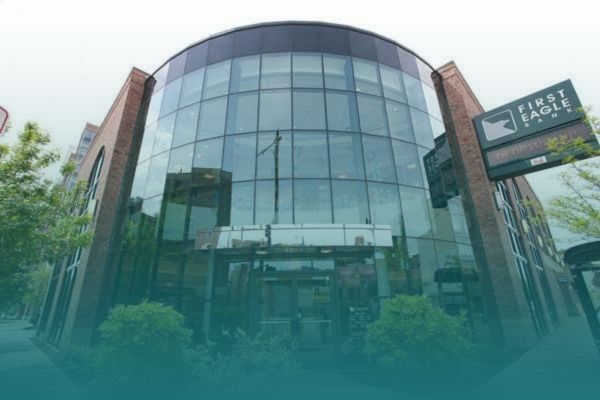
Across the country, CDFI banks and mission-driven financial institutions are helping address one of the most persistent challenges facing U.S. communities: the shortage of affordable housing. In Chicago, First Eagle Bank offers a compelling example of what this work looks like in practice, and what it takes to do it well.
First Eagle Bank, a certified CDFI bank, has made affordable housing a core part of its community development strategy. Its work is concentrated in many of Chicago’s South and West side neighborhoods, where decades of disinvestment have contributed to vacant land, aging housing stock, and limited access to affordable homeownership and quality rental housing. Rather than treating these challenges as isolated financing opportunities, First Eagle has built its approach around long-term partnerships with nonprofit developers, community coalitions, CDFIs, and mission-aligned housing operators.
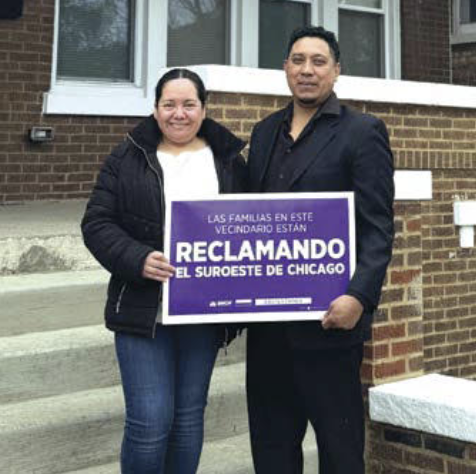
At the center of this strategy is collaboration. First Eagle partners closely with local nonprofit developers and coalitions, including initiatives like Reclaiming Chicago, a community-led campaign working to build and rehabilitate thousands of homes across historically disinvested neighborhoods. The initiative, led by United Power for Action and Justice and a coalition of local organizations, aims to construct or rehab more than 2,000 homes while creating pathways for families to build wealth through homeownership.
This model reflects a broader shift in how affordable housing solutions are being designed. Rather than relying on external developers or one-off projects, Reclaiming Chicago focuses on rebuilding neighborhoods “at scale,” block by block, using local institutions with established track records. The goal is not just to create housing units, but to restore community stability, reduce vacancy, and support long-term economic mobility.
First Eagle Bank plays a catalytic role within this ecosystem. The bank provides flexible, below-market capital to support both new construction and rehabilitation of single-family homes and small multifamily properties. In one recent example, the bank approved a $1 million, 0% interest revolving loan facility to help finance construction through community partners. This type of capital is particularly valuable because it can be recycled as homes are completed and sold, enabling continuous reinvestment in neighborhoods that need it most.
This type of financing is especially important because affordable housing development often requires capital that is more flexible and patient than what the conventional market provides. First Eagle’s role is not simply to finance individual transactions, but to help build the infrastructure for ongoing community-led development. In neighborhoods where vacant lots and abandoned properties have long signaled disinvestment, this approach can support new housing supply while reducing the likelihood that revitalization comes at the expense of existing residents.
The human impact of this work is reflected in a borrower story shared by Reclaiming Chicago. Oswaldo, his wife, and their two children arrived in the United States in 2018. He was eager to find work and buy a home for his family, but did not yet understand the homebuying process. Through the Reclaiming Chicago network, the Southwest Organizing Project connected him with a community-based housing counseling agency that helped him build credit, negotiate his salary at work, budget, and save for a down payment. After years of effort, Oswaldo was able to purchase a fully rehabilitated home for his family in January 2025. Reflecting on what homeownership means for his family, he shared, “Knowing my children have their own bedrooms makes me so proud.”
First Eagle recognizes that addressing housing affordability requires both expanding access to homeownership and preserving existing affordable rental units.. The bank recently provided a 10-year, below-market-rate loan to Brad Suster and Verity Investments, LLC, a mission-aligned affordable housing operator with a large portfolio of residential rental properties across Chicago’s low- and moderate-income neighborhoods. The financing was secured by 13 properties totaling 60 residential units on Chicago’s South Side. The transaction allowed the borrower to consolidate existing debt into one banking relationship, simplifying the portfolio’s structure while creating additional stability and flexibility.
This preservation-oriented financing matters. In many neighborhoods, affordable rental housing is not lost only through demolition or new luxury development. It can also be lost when responsible owners lack access to stable, affordable capital to maintain properties over time. By providing below-market terms to operators committed to safe and quality housing, First Eagle helps preserve existing affordable rental stock for local residents and working families.
As Faruk Daudbasic, Director of Community Development at First Eagle Bank, explained, “Because of the strong community development impact of the properties and the borrower’s long-term commitment to preserving affordable housing, we were able to provide below-market financing and more attractive loan terms as part of the transaction. Our goal is not only to provide financing, but to support operators who are committed to maintaining safe and stable housing in the communities they serve.”
First Eagle’s broader housing strategy is particularly relevant in a city where gentrification and displacement remain pressing concerns. The bank acknowledges that neighborhood investment can be complicated. New development can bring needed resources and housing options, but without intentionality, it can also contribute to rising costs that push long-time residents out. First Eagle’s approach seeks to navigate that tension by focusing on vacant land, abandoned or underutilized properties, community-based partners, affordable homeownership pathways, and preservation of existing rental housing.
The bank also extends its impact through partnerships with CDFIs and nonprofit loan funds. Through equity equivalent investments, or EQ2s, First Eagle provides flexible, patient capital to organizations that finance affordable housing, small businesses, multifamily preservation, and predevelopment activities. These investments help strengthen local lending infrastructure and expand the reach of community development capital beyond what any single bank could do directly.
Despite the strength of this model, scaling it remains difficult. Delivering 0% and below-market financing is capital intensive, and reductions in low-cost public-sector funding have made it harder for community banks to sustain and expand this type of work. For First Eagle, the primary constraint is not a lack of projects or partners. It is access to low-cost, flexible capital.
That creates a clear opportunity for impact investors. Deposits and catalytic capital can help institutions like First Eagle expand housing work that is already underway, already place-based, and already connected to trusted local partners. Additional capital could help scale revolving construction financing, preserve more affordable rental units, and support more families in accessing stable homeownership.
First Eagle Bank’s work demonstrates what effective community finance can look like: locally grounded, partnership-driven, flexible, and responsive to the realities of affordable housing development. For investors seeking tangible ways to support housing stability and address displacement risk, First Eagle offers a model that is not theoretical. It is already operating in the neighborhoods where the need is urgent, and with the right capital, it can do more.