Place-based investing is gaining renewed attention among impact investors. For some, it reflects a shift toward geography as a way to target impact. For others, it signals a deeper recognition that capital alone is not enough to drive durable outcomes. What is emerging is a more grounded approach to investing, one that starts not with products or asset classes, but with place.
Locus Bank’s place-based investing strategy offers a useful case study in what this looks like in practice. Their work in Southern Virginia, particularly in and around Danville and Martinsville, illustrates how CDFIs can move beyond transactional lending toward a more integrated, ecosystem-driven model.
At its core, place-based CDFI lending is not a new product. It is a different way of working. Rather than evaluating and financing deals one at a time across a broad geography, Locus made a deliberate decision to focus deeply on a specific region that has experienced long-term disinvestment following the collapse of its textile industry.
That shift required a change in posture. Instead of leading with capital, Locus began by listening. The organization hired staff from the region and committed to sustained, on-the-ground engagement, showing up consistently in conversations with local governments, developers, philanthropic partners, and community stakeholders.
This “deep listening” is not incidental. It is foundational. Through market research and ongoing dialogue, Locus worked to understand what the community itself identified as priorities, rather than imposing a predefined investment thesis. In Southern Virginia, that process surfaced a familiar but critical set of needs: affordable housing, small business development, and revitalization of historic and commercial spaces.
More importantly, it revealed gaps that capital alone could not fill.
One of the clearest insights was the shortage of local developers capable of taking on even modest projects. In response, Locus and its partners began shaping what they describe as a “homegrown developer” approach, focused on building local capacity to move projects from concept to completion.
This points to a central feature of effective place-based investing: the integration of capital with capacity building.
In underinvested regions, many otherwise viable projects stall before they are financeable. Developers may lack familiarity with zoning processes, access to predevelopment funding, or relationships with contractors and capital providers. Small businesses and municipalities face similar constraints. Without targeted support, capital arrives too early or too late, and opportunities are lost.
By contrast, combining capacity building with flexible financing helps create a pipeline of investable projects while reducing execution risk. As Locus’ experience suggests, preparing borrowers to effectively deploy capital and maintaining engagement after investment can surface challenges early and improve both financial and impact outcomes.
This approach also shifts the role of the CDFI. Rather than acting solely as a lender, the institution becomes an ecosystem participant and, at times, a coordinator. In Southern Virginia, this has meant convening stakeholders, aligning resources, and helping move the region from fragmented efforts toward more coordinated action, particularly around housing.
The results are beginning to take shape in both individual projects and broader patterns of investment.
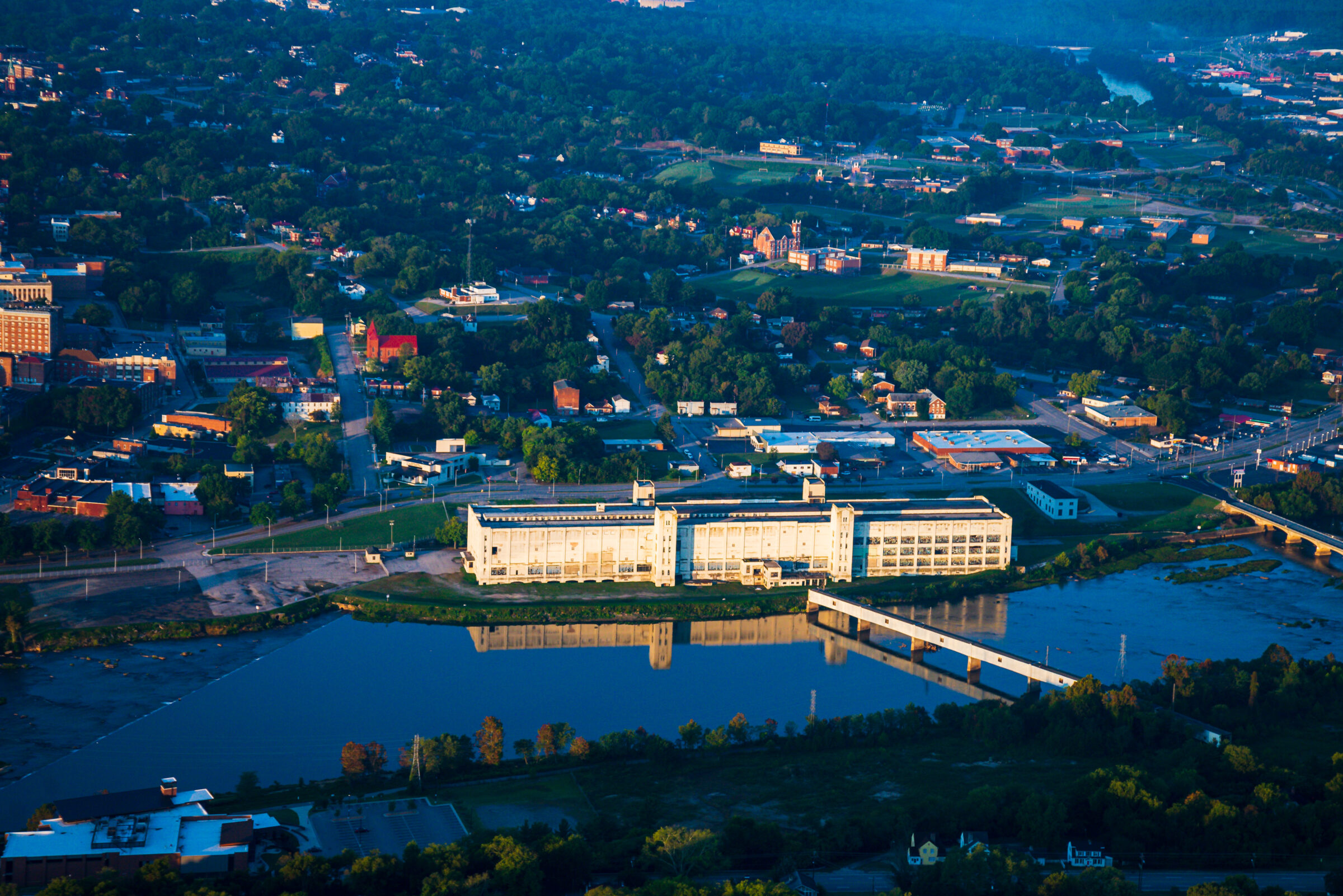
In Danville, Locus has participated in the redevelopment of Dan River Falls, where a former textile mill is being transformed into 150 apartments along the Dan River. The project brings new housing to a site that had long sat vacant, while contributing to the revitalization of the surrounding downtown.
In Martinsville, financing has supported the redevelopment of a former bank building into workforce housing, converting a long-underutilized downtown landmark into dozens of new apartments. At the same time, Locus has helped a local developer expand a commercial property from a handful of businesses to a growing mix of active storefronts, contributing to the vibrancy of the downtown corridor.
Individually, these are compelling transactions. Collectively, they point to something more significant: a shift in how a regional economy functions, with stronger local actors, better alignment across institutions, and a growing pipeline of investable opportunities.
For impact investors, this model presents a distinct value proposition.
First, it enables more effective capital allocation. By grounding investment strategies in local market intelligence and community-defined priorities, place-based approaches reduce the risk of mismatch between capital and need.
Second, it offers a pathway to mitigating risk. Investments are not made in isolation, but alongside efforts to build capacity and readiness. By engaging before and after capital deployment, CDFIs can identify challenges early and improve both financial performance and impact outcomes.
Third, it aligns with a broader shift in the market. Investors are increasingly interested in strategies that demonstrate tangible, localized outcomes. Place-based investing provides a clear line of sight between capital and community change, making impact more visible and more credible.
At the same time, this work is resource-intensive. It requires more than capital commitments.
Place-based strategies depend on flexible, patient capital that can be paired with grants to support predevelopment and capacity building. They require funding for the ongoing work of relationship building, convening stakeholders, and coordinating across sectors. And they require investors who are willing to take a longer-term view, recognizing that building a functioning local ecosystem takes time.
For investors looking to deepen their impact, the implication is straightforward. Supporting place-based investing means investing not only in deals, but in the conditions that make those deals possible.
That includes providing catalytic capital, supporting capacity building efforts, and backing institutions that are willing to do the slower, less visible work of listening, aligning, and staying engaged in a place over time.
As Locus’ experience in Southern Virginia demonstrates, that groundwork is what ultimately allows capital to do its job.